QR codes have become a simple way to connect printed materials with digital information. You can use them on menus, business cards, posters, product packaging, event tickets, documents, and many other places. But when creating a QR code, you may notice two options: static QR code and dynamic QR code. Both can look almost the same when printed, but they work differently behind the scenes. A static QR code keeps its information fixed, while a dynamic QR code lets you change its destination later. The right choice depends on what you want your QR code to do, how often the information may change, and whether you need scan data.
What Is a Static QR Code?
A static QR code stores the actual information directly inside the QR code pattern.
For example, if you create a static QR code for a website, the website address is stored in the code itself. When someone scans it, their phone reads that address and opens it.
Because the information is fixed, you cannot change the QR code’s stored destination after creating it.
If you need to change the destination later, you normally need to create a new QR code and replace the old printed one.
Common Uses for Static QR Codes
Static QR codes are a good choice when the information is unlikely to change.
You can use them for:
- A permanent website URL
- Wi-Fi details
- Contact information
- A business card
- Social media profiles
- Simple text
- A fixed location
- Event information that will not change
- A permanent document or file link
For example, if you put your phone number and email address into a QR code on a business card, you probably will not need to change it often.
What Is a Dynamic QR Code?
A dynamic QR code works differently.
Instead of storing the final destination directly, it usually contains a short link that sends the scanner through a QR code service. That service then sends the person to the current destination you have selected.
This extra step gives you more control.
You can often change the destination later without changing the printed QR code. Dynamic QR codes can also provide scan analytics, depending on the service you use.
For example, imagine you print 5,000 flyers with a QR code for a marketing campaign. A week later, you want the same QR code to send people to a different offer.
With a dynamic QR code, you can update the destination without printing 5,000 new flyers.
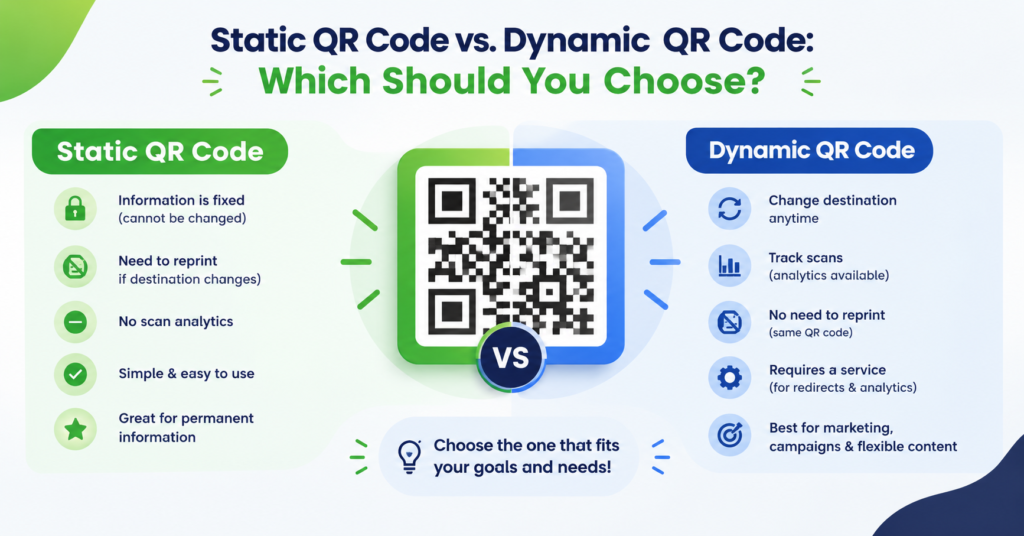
Static QR Code vs. Dynamic QR Code: The Main Difference
The easiest way to understand the difference is this:
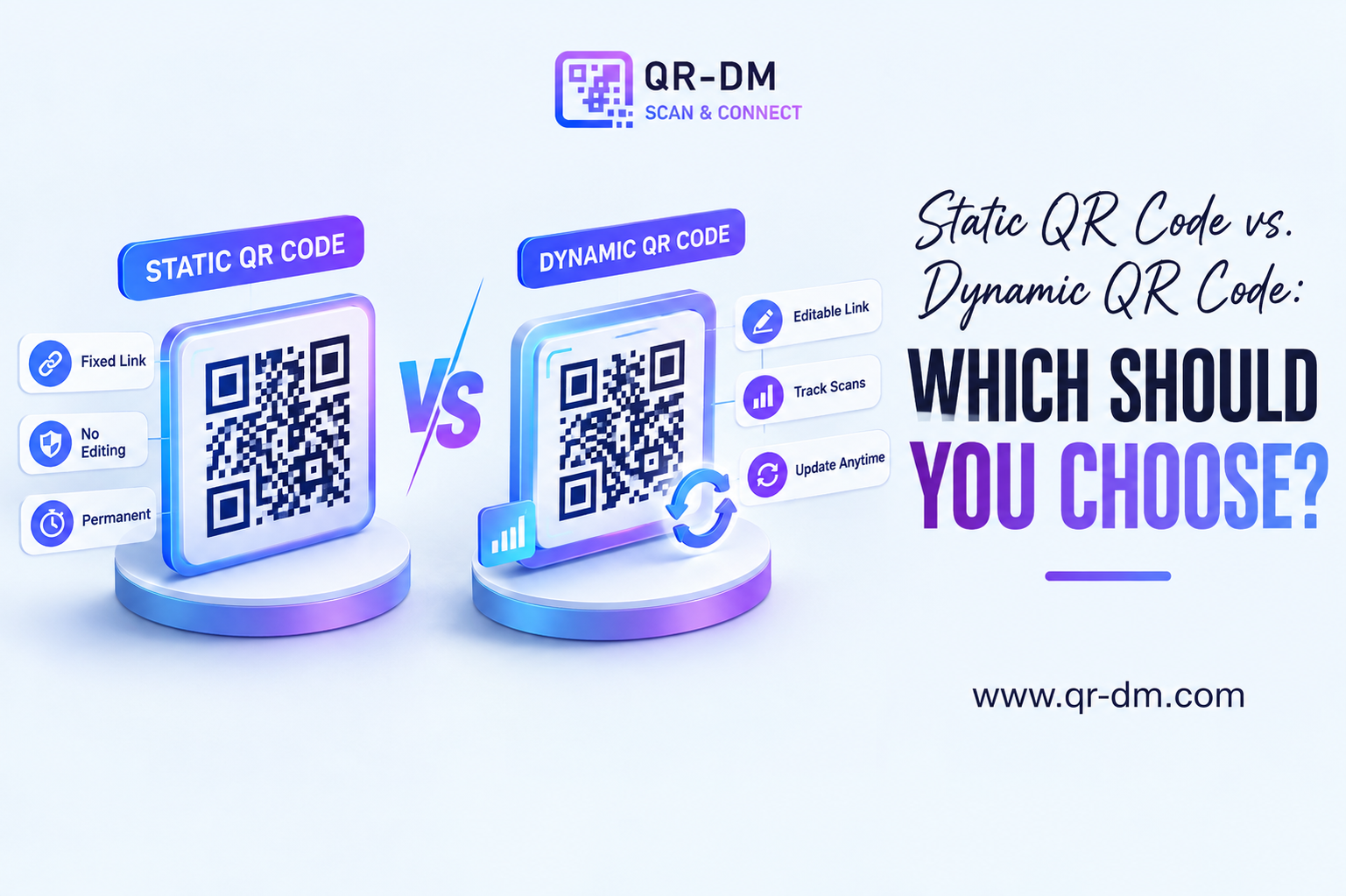
Static QR code: The information is fixed inside the code.
Dynamic QR code: The printed code stays the same, but the destination behind it can be changed.
That one difference affects several other features.
| Feature | Static QR Code | Dynamic QR Code |
| Change destination later | No | Yes |
| Need to reprint after changing destination | Yes | Usually no |
| Scan analytics | Not built in | Usually available |
| Information stored | Directly in the code | Usually through a redirect |
| Ongoing service needed | No for the QR itself | Yes, for the redirect |
| Best for | Fixed information | Changeable content |
| Long-term maintenance | Low | Requires service management |
The exact features, pricing, analytics, and service rules can vary between QR code providers.
Static QR Code: Pros and Cons
A static QR code is often the simplest option.
Benefits of Static QR Codes
1. Simple to use
There is no extra destination system to manage. The information is placed directly inside the QR code.
2. Good for permanent information
If you know the destination will stay the same, a static QR code can do the job well.
3. No need to update the QR code
Once printed, the QR pattern stays the same.
4. Less maintenance
There is no redirect dashboard that you need to keep managing for the QR code itself.
5. Great for everyday uses
Static codes work well for things like Wi-Fi details, contact information, fixed links, and other information that does not need regular updates.
Limitations of Static QR Codes
The biggest limitation is simple: you cannot change the information stored inside the QR code after it has been created.
Suppose you print a static QR code that points to:
yourwebsite.com/summer-sale
Later, you move the campaign to:
yourwebsite.com/winter-sale
The old QR code still points to the original address.
You would need to create and print a new QR code unless you control the original web address and change the content at that same address.
Dynamic QR Code: Pros and Cons
Dynamic QR codes are useful when flexibility matters.
Benefits of Dynamic QR Codes
1. Change the destination
You can often update where the QR code sends people without changing the printed QR pattern.
2. Track scans
Dynamic QR services commonly provide information about scans, such as the number of scans and other campaign data. The exact analytics depend on the provider.
3. Useful for marketing
Businesses can use scan information to understand whether a printed campaign is getting attention.
4. Save printing costs
If the destination changes, you may not need to replace every poster, sign, package, or brochure.
5. Better for long campaigns
Dynamic QR codes can be helpful when a campaign may change several times during its life.
Limitations of Dynamic QR Codes
Dynamic QR codes also have some things to consider.
They depend on the service that manages the redirect. If that service becomes unavailable or the redirect is disabled, the QR code may no longer send people to the intended destination. The exact rules depend on the provider.
Some dynamic QR services may also require a paid plan for continued access to editing or analytics features.
That means you should always understand the provider’s terms before putting a dynamic QR code on something expensive or difficult to replace.
You Can Also Read : QR Code Not Working? 10 Reasons Why and How to Fix It
When Should You Choose a Static QR Code?
Choose a static QR code when your information is fixed and you do not need scan tracking.
Here are some good examples.
Business Cards
If your contact details are stable, a static QR code can connect people to your contact information or website.
Wi-Fi Access
A QR code can make it easier for guests to connect to a Wi-Fi network.
Just remember that if the Wi-Fi details change, you may need to create a new static QR code.
Permanent Website Link
If you are linking to a stable website address that you expect to keep, static can be a simple choice.
Basic Printed Information
For a poster, document, brochure, or sign where the destination will remain the same, a static QR code may be all you need.
When Should You Choose a Dynamic QR Code?
Choose a dynamic QR code when you expect to change the destination or need scan analytics.
Restaurant Menus
A restaurant may change its menu regularly. A dynamic QR code can keep the printed code in place while the destination is updated.
Marketing Campaigns
A business may want to send customers to different landing pages during a campaign.
A dynamic code can make this easier without replacing the printed material.
Product Packaging
Product information may change over time. A dynamic QR code can be useful when the packaging is printed in large quantities and replacing it would be expensive.
Events
An event QR code might first point to registration and later send visitors to a schedule, map, or event information page.
Large Signs and Displays
Replacing a QR code on a large sign, wall, vehicle, or display can take time and money. Dynamic QR codes can be useful when the destination may change later.
Static vs. Dynamic QR Code for Businesses
For businesses, the choice usually comes down to simplicity vs. flexibility.
If you have a small business and simply want a QR code on a business card that leads to your website, a static QR code may be enough.
But if you are running marketing campaigns and want to know how many people scanned your printed ads, a dynamic QR code can be more useful.
Ask yourself:
- Will the destination change?
- Do I need scan analytics?
- Will reprinting be expensive?
- Will the QR code be used for a long time?
- Do I need to manage several campaigns?
- Am I comfortable depending on a QR code service?
Your answers can make the choice much easier.
Can You Change a Static QR Code After Printing?
No, not the information stored inside it.
Once a static QR code has been created and printed, its encoded information is fixed.
For example, if the QR code contains a particular website address, you cannot edit that address inside the printed QR pattern.
However, there is one useful point to understand.
If the static QR code points to a website address that you control, you can change the content on that webpage without changing the QR code.
For example:
Static QR code → yourwebsite.com/menu
You can keep the same address but update the menu shown on that page.
The QR code is still static because the encoded web address has not changed.
Can You Change a Dynamic QR Code After Printing?
Yes, that is one of the main reasons people choose dynamic QR codes.
The printed QR pattern stays the same, while the destination connected to it can be updated through the service managing the QR code.
For example:
Printed QR code → Campaign A
Later:
Same printed QR code → Campaign B
You do not need to create a completely new printed QR pattern just because the destination changed.
Do Static QR Codes Expire?
A static QR code does not have an expiration date built into the QR pattern.
However, the destination itself can stop working.
For example, a static QR code may continue to scan correctly, but the website it opens could have been deleted or moved.
So it is better to say that a static QR code does not expire by itself, rather than saying every static QR code will work forever.
Do Dynamic QR Codes Expire?
A dynamic QR code also does not physically expire as an image.
However, it depends on the service managing its redirect.
If the service stops the redirect because of a canceled plan, account problem, provider shutdown, or another service rule, the QR code may stop reaching its destination.
Because policies differ, check the provider’s terms before using a dynamic QR code for something important.
Which One Is Better for Marketing?
For marketing, dynamic QR codes are often the better choice when you need to measure scans or change campaigns.
Imagine printing a QR code on a large poster.
During the first month, it could send people to a product launch.
The next month, you could change it to a discount page.
Later, you could send visitors to a review page.
The printed code stays the same while the destination changes.
Analytics can also help you understand whether people are scanning the code and how a campaign is performing.
Which One Is Better for Personal Use?
For many personal uses, static QR codes are enough.
For example, if you want to create a QR code for:
- Your Wi-Fi
- Your contact information
- A personal website
- A social profile
- A fixed document
- A permanent location
You may not need advanced management features.
A static QR code can keep things simple.
How QR DM Can Help
QR DM supports both static and dynamic QR code options, so you can choose based on what your project needs.
You can create QR codes for websites, Wi-Fi, phone numbers, SMS, email, business cards, locations, text, WhatsApp, documents, PDFs, events, payments, multi-link pages, and other uses.
For projects that need more control, QR DM also provides features such as dynamic QR codes and scan analytics.
The important thing is to choose the option before you print or share the QR code. Think about how long you will use it and whether the destination may change later.
A Simple Way to Choose
If you are still unsure, use this simple rule:
Choose Static if:
- The information will stay the same.
- You do not need QR-specific scan analytics.
- You want a simple QR code.
- Replacing the code later would not be a problem.
Choose Dynamic if:
- You may change the destination.
- You want scan analytics.
- You are running a marketing campaign.
- The QR code will be printed on expensive or hard-to-replace materials.
- You want more control over the destination after printing.
There is no universal winner. The better choice is the one that matches your actual needs.
FAQs
1. What is the difference between a static and dynamic QR code?
A static QR code stores its information directly in the QR pattern, so the information cannot be changed after creation. A dynamic QR code normally uses a managed redirect, allowing the destination to be changed later without replacing the printed QR code.
2. Is a static or dynamic QR code better?
It depends on your purpose. Static is usually better for fixed information, while dynamic is useful when you need to change the destination or track scans.
3. Can I edit a static QR code after printing?
No. You cannot change the information encoded in a printed static QR code. If the destination itself needs to change, you normally need to create a new QR code.
4. Do dynamic QR codes expire?
A dynamic QR code depends on the service managing its redirect. Whether it expires, remains active after a plan ends, or has other limits depends on the provider’s policies. Always check the service terms before printing large quantities.
5. Should I use a dynamic QR code for my business?
A dynamic QR code can be a good choice if you want to change destinations, track scans, or manage long-term marketing campaigns. For simple and permanent uses, a static QR code may be all you need.
Conclusion
Static and dynamic QR codes can both be useful, but they are made for different needs. A static QR code is a simple choice when your information is fixed and you do not need to change it later. A dynamic QR code gives you more flexibility because you can usually update the destination and access scan information without replacing the printed code. For business campaigns, changing menus, product packaging, and large printed materials, dynamic can be especially useful. For Wi-Fi, contact details, permanent links, and simple personal projects, static is often enough. Before creating your QR code, think about whether the destination may change and whether you need analytics. That simple decision will help you choose the right type from the start.
Ready to create your own QR code?
Put these strategies into practice. Generate clean, high-resolution static or dynamic QR codes in seconds with full design customization, vector export, and scan analytics.
Zain
Technical Writer & QR Specialist